News
In Solidarity and Joy: A Black History Month Reflection By Brenda Solórzano
This Black History Month, I found myself in two rooms that left me thinking about what it means to invest in Black freedom. Not in the abstract. Not as a line item. But as a commitment rooted in trust, solidarity, and a willingness to be honest about where we’ve fallen short.
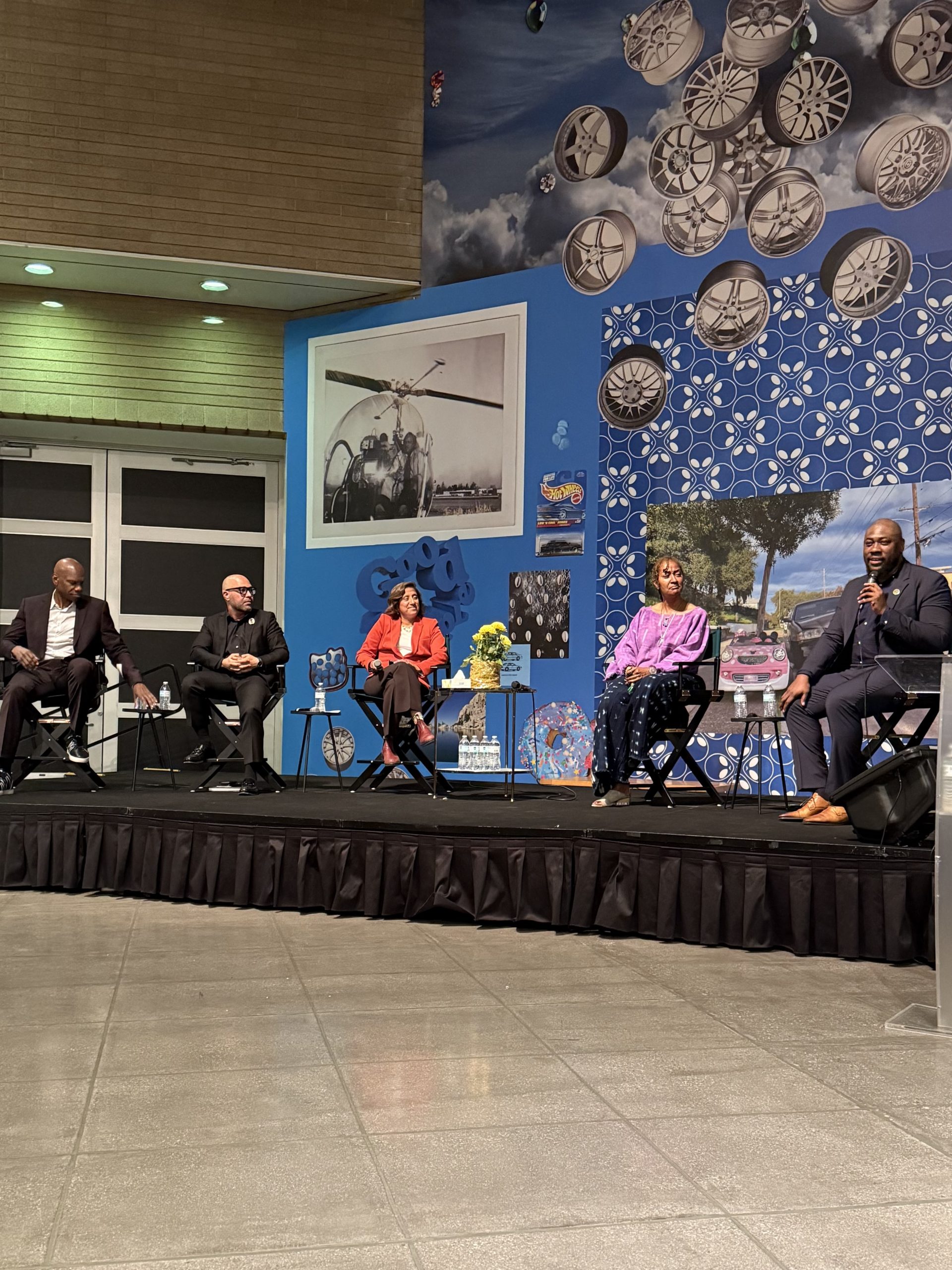
On February 24, our California Endowment Board gathered for a learning session on funding Black freedom — a conversation grounded in history, sharpened by the devastation of the January LA fires, and made urgent by a political moment where equity itself is under attack. The next evening, I joined over 200 community leaders, youth organizers, advocates, and partners at Building Black Futures, hosted by St. Joseph Center at the California African American Museum.
Both spaces moved me. And both pushed me to ask: Are we being bold enough?
The Long Arc
Board member Torie Weiston-Serdan opened our Board session by grounding us in history — reminding us that today’s erasure and attacks are the latest chapter in a centuries-long, systemic effort to control, contain, and extract from Black communities. This is why it matters that philanthropy understand the long arc. Every generation of Black organizers has faced a version of this moment — progress met with backlash, investment followed by retreat. If philanthropy only shows up during the peaks and disappears during the rollbacks, we aren’t partners. We’re spectators. Leaning into the long arc means staying when it’s hard, funding even if we’re the only ones, and trusting the leaders who have been navigating these cycles long before we arrived.
From Crisis Response to Lasting Power
Marc Philpart, President and CEO of the Black Freedom Fund, offered a challenge that landed particularly hard in this moment: when a crisis occurs in the Black community, philanthropy parachutes in, and then as soon as the news cameras turn away, the support recedes.
The Black Freedom Fund was created to end that cycle. Not as a reaction to a single moment, but as a lasting institution built for and by Black communities in California. Since 2020, the Fund has directed $48 million to 206 Black-serving organization and is now building a $200 million endowment. The Altadena fires were one proof point of that durable leadership: when disaster struck, the Fund was able to mobilize quickly after the Altadena fires — reaching into communities and building connections that made immediate relief possible.
For Black communities facing displacement and erasure on every front, this is about more than funding. It’s about making sure the leadership, the organizations, and the communities themselves have a permanent foothold — not one that depends on whether the rest of the world is paying attention. That’s the difference between investing in Black survival and investing in Black futures. Survival responds to emergencies. Futures build something that lasts.
Altadena: The Crisis After the Crisis
We also heard directly from three leaders at the center of recovery in Altadena — Brandon Lamar of Harambee Ministries and Project Passion, Heavenly Hughes of My Tribe Rise, and Jasmin Shupper of Greenline Housing Foundation. Each brought a different lens — mutual aid, community organizing, structural racism baked into housing and recovery policy — and each made our Board sit with hard questions about what real solidarity looks like after the headlines fade.
Because that’s what’s happening right now. Insurance is running out. Temporary housing is running out. Families are facing a whole new level of need. And the public, the media, and too many foundations have already moved on. The fires may be out, but for Black communities in Altadena, the crisis is deepening — and it’s deepening in silence.
The leaders on that panel weren’t asking for philanthropy to come save Altadena. They were asking us to keep paying attention. To fund what’s working. To stop treating disaster recovery like a moment instead of a commitment. Black communities in Altadena are already doing the work. The question is whether we’ll match their urgency with staying power.
Free the Money
At the Building Black Futures convening, I had the privilege of speaking on a panel with Supervisor Holly Mitchell, Henry Hips, George Fatheree, and moderated by Dr. Ryan J. Smith. When asked about the role of public and private funders in funding Black futures, I said something that clearly struck a chord: “we need to free the money.”
And then the room — all 200 people — started chanting it back. Free the money. Free the money.
That wasn’t planned. But it captured something real and deeply felt.
What I meant was simple: trust the people closest to the problems to direct the resources. Stop gatekeeping. Stop over-engineering how dollars get spent. Communities know what they need — they’ve always known. Our job in philanthropy, in government, in every system that resources community, is to move with urgency, dismantle barriers, and get out of the way.
This is especially true right now. Across the country, DEI is under political attack. Critical programs and services are being defunded. The pillars of civil society are being dismantled. And Black-serving organizations — already dramatically underfunded — are being asked to do more with less. This is not the moment to hold tighter because of fear. This is the moment to resource those who know best and move more resources faster than ever.
What I’m Carrying Forward
I left the museum on February 25 carrying hope — not the abstract kind, but the kind grounded in what I saw in those rooms. The brilliance of Black organizers. The power of young people leading. The relationships growing across this movement.
Philanthropy’s role is not to control solutions. It’s to resource community leadership, align our tools with community vision, and stand in solidarity — especially when diversity is under attack and it would be easier to retreat.
Free the money. Trust communities. Stay accountable.
To the organizers and leaders who have carried this work long before philanthropy arrived: we see you. And we’re not going anywhere.
#WeBelongInCA
Learn how we are using the immense power in belonging to help build a healthier, more just California for All.We are advancing
health and racial
equity in California

Health Systems

Health Systems
Our health system works best when every Californian has access to quality and affordable health care.
Learn More
Justice Reinvestment

Justice Reinvestment
Re-imagining a criminal justice system that centers on prevention and healing.
Learn More
Inclusive Community Development

Inclusive Community Development
Our communities and neighborhoods thrive when policies advance health and racial equity for all Californians.
Learn More
Power Infrastructure

Power Infrastructure
Building Power in resilient communities across the state for a stronger California.
Learn More
Schools

Schools
Academic achievement, inclusive learning environments and health go hand in hand.
Learn More